Freeze-Thaw
Cracked Flashing After Winter
Freeze-thaw swings open sealed coping joints and crack old flashing at walls and curbs, which shows up as spring leaks.

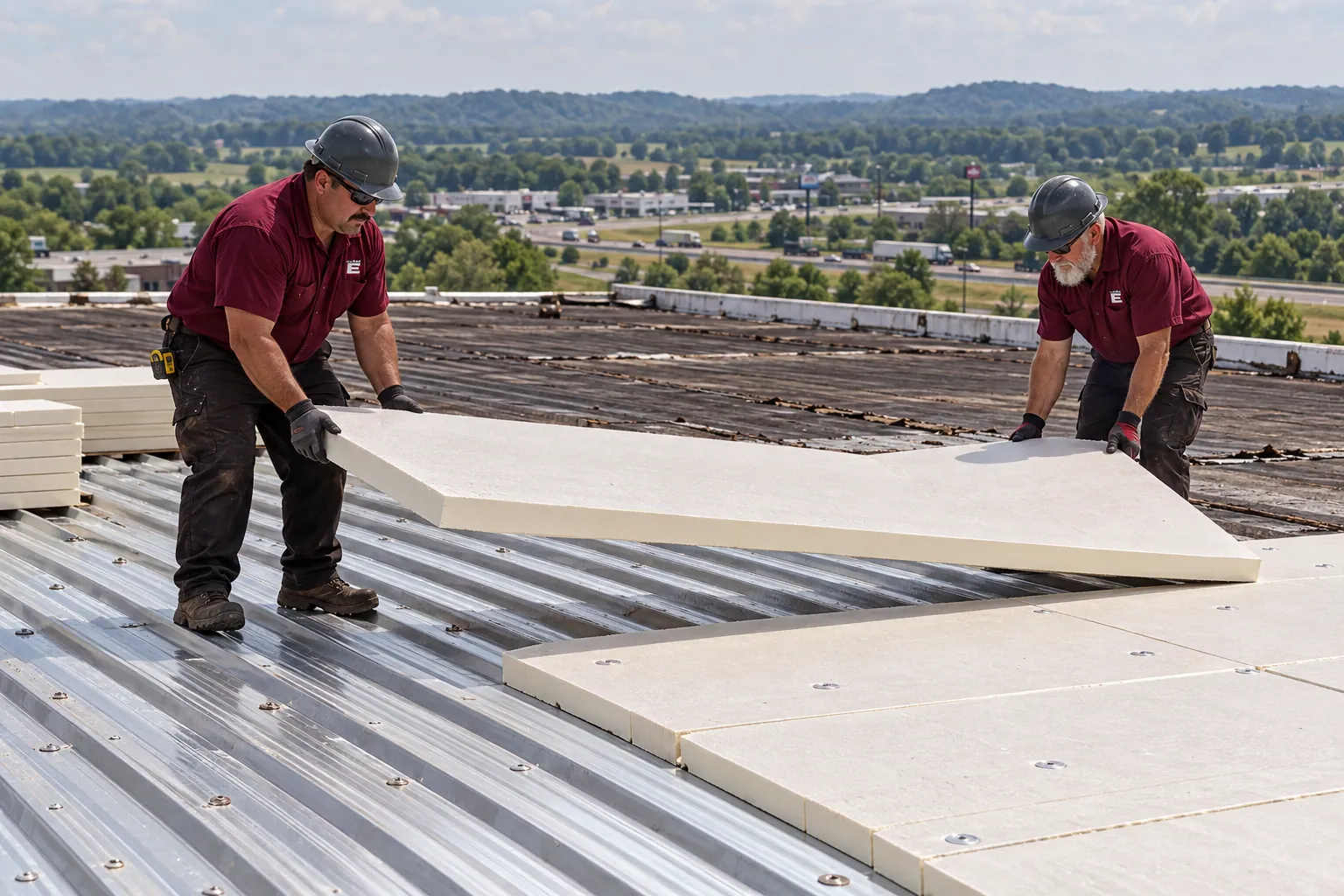
As a Munfordville commercial roofing contractor, we plan roof replacements and repairs around Kentucky's dew, rain, and freeze-thaw cycles, matching each system to the season.
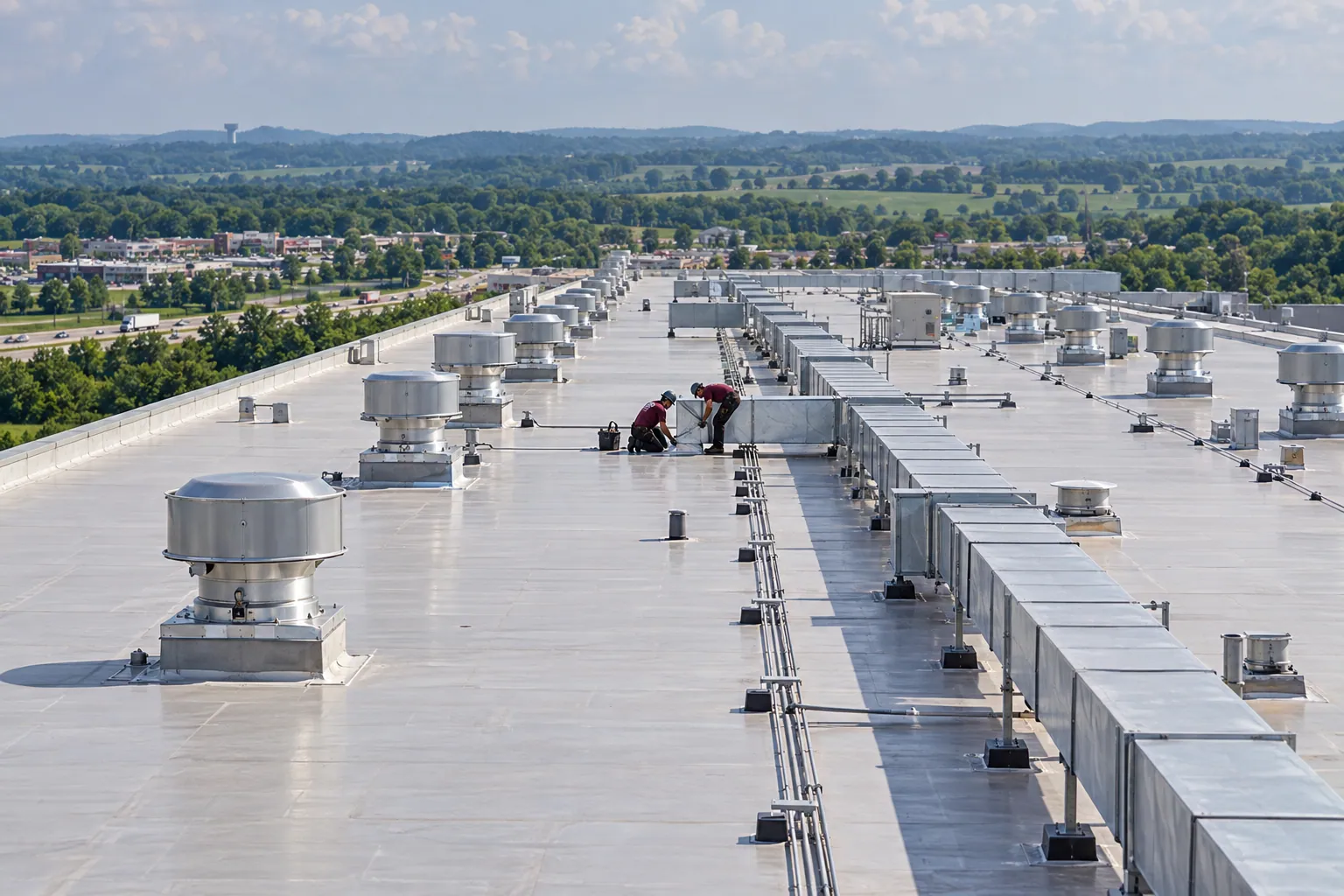
A Munfordville commercial roofing contractor schedules by the weather as much as the calendar. Membrane laps need dry surfaces, adhesives have temperature limits, and winter freeze-thaw swings can stop adhered work for days, so the system and the start date are picked together.
Mechanically attached sheet and metal panels keep going in colder months, while fully adhered roofs wait for warmer, drier stretches. Every section is sealed before the crew leaves, so a sudden storm meets a closed roof.
Kentucky weather works on a roof in four ways, and each one leaves its own marks.
Freeze-thaw swings open sealed coping joints and crack old flashing at walls and curbs, which shows up as spring leaks.
High wind pulls at edge metal and corners first, so a loose cleat after a storm is the start of a peeling roof.
Hail dents insulation under the membrane and cuts sheet near metal edges, and those spots feel soft underfoot on a roof walk.
Drains and gutters sized too small, or clogged with leaves, overflow in heavy rain and push water under the laps.
A roof built for central Kentucky weather answers wind, hail, rain, and freezes with specific details.
Edge cleats, corner fastening, and parapet coping follow the system maker's wind requirements where uplift is strongest.
A cover board under the membrane, and thicker sheet where needed, takes the hit instead of the insulation.
Drain sizing, overflow outlets, and tapered slope carry heavy rain off the roof without backing up under the laps.
Flexible flashing and sealed coping joints ride out freeze-thaw cycles without cracking open.
Matching the roof system to the season keeps adhered work out of cold snaps and avoids stalled projects.
Hart County's permit form is gathered before the season opens, so work starts when the weather allows.
These three services cover most roofs here, and each has its own weather window.
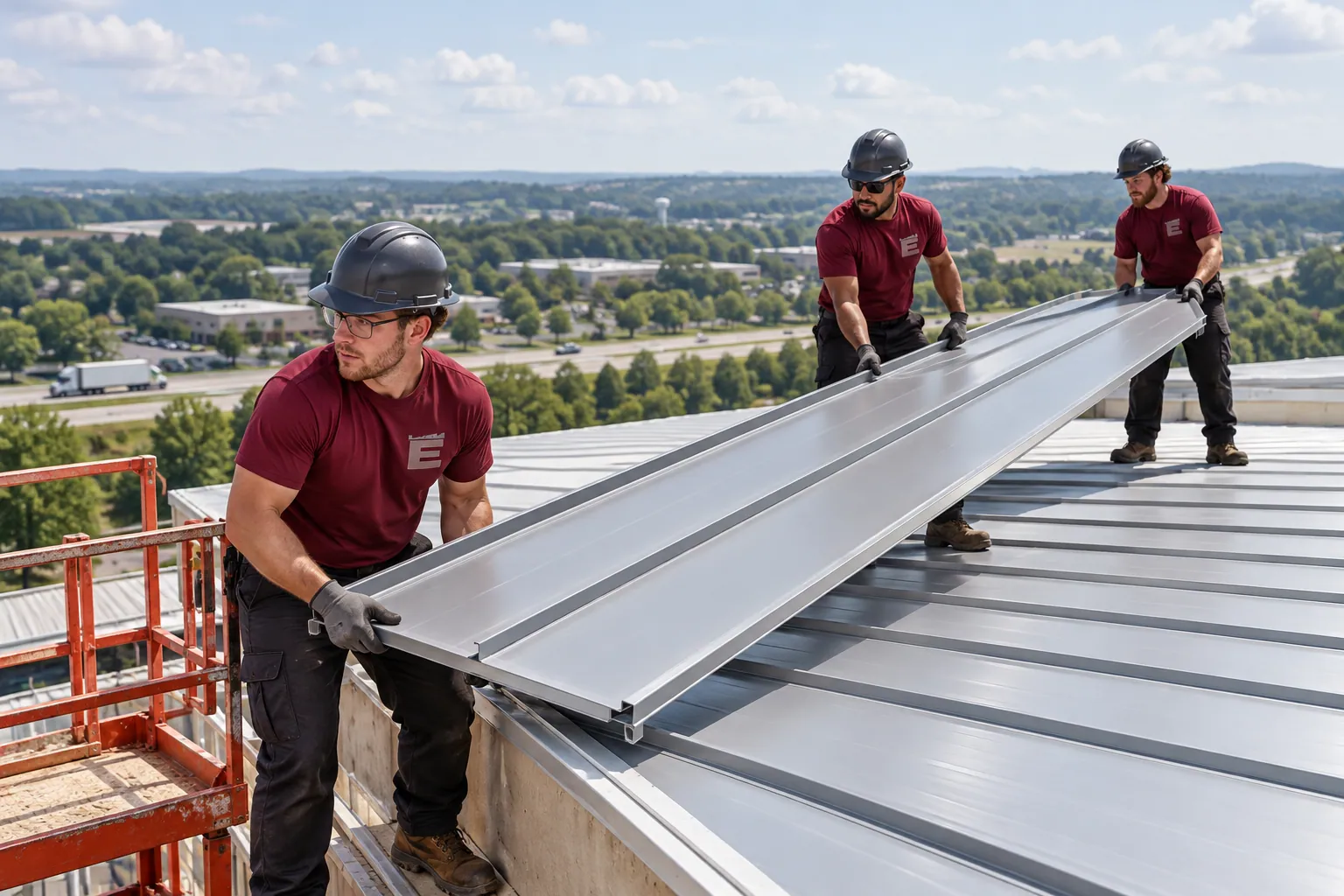
Standing seam and R-panel roofs go on in colder months, with insulation planned to stop condensation under the panels.
Commercial metal roofing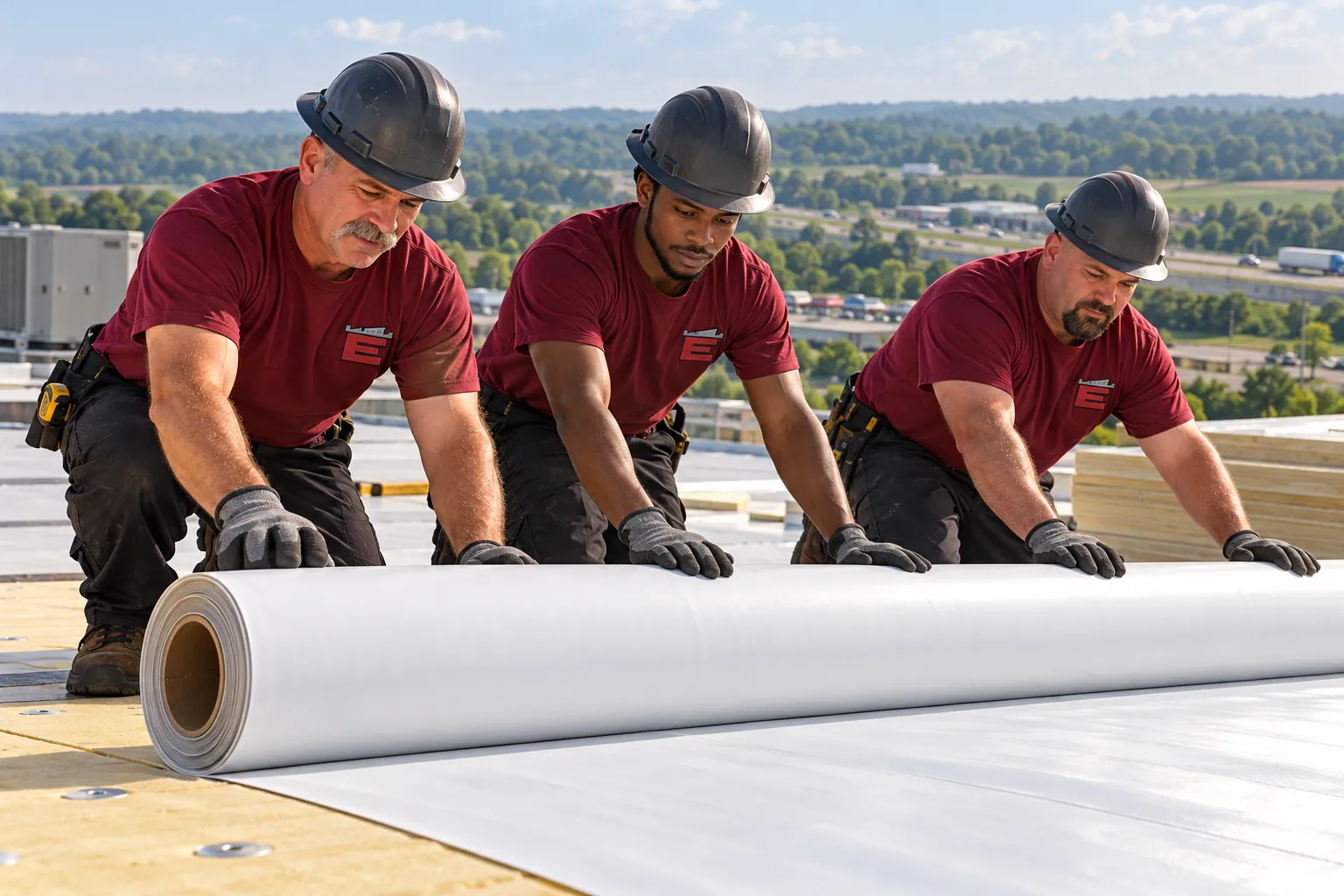
Mechanically attached TPO keeps going in cool weather, while fully adhered TPO waits for its temperature range.
TPO roofing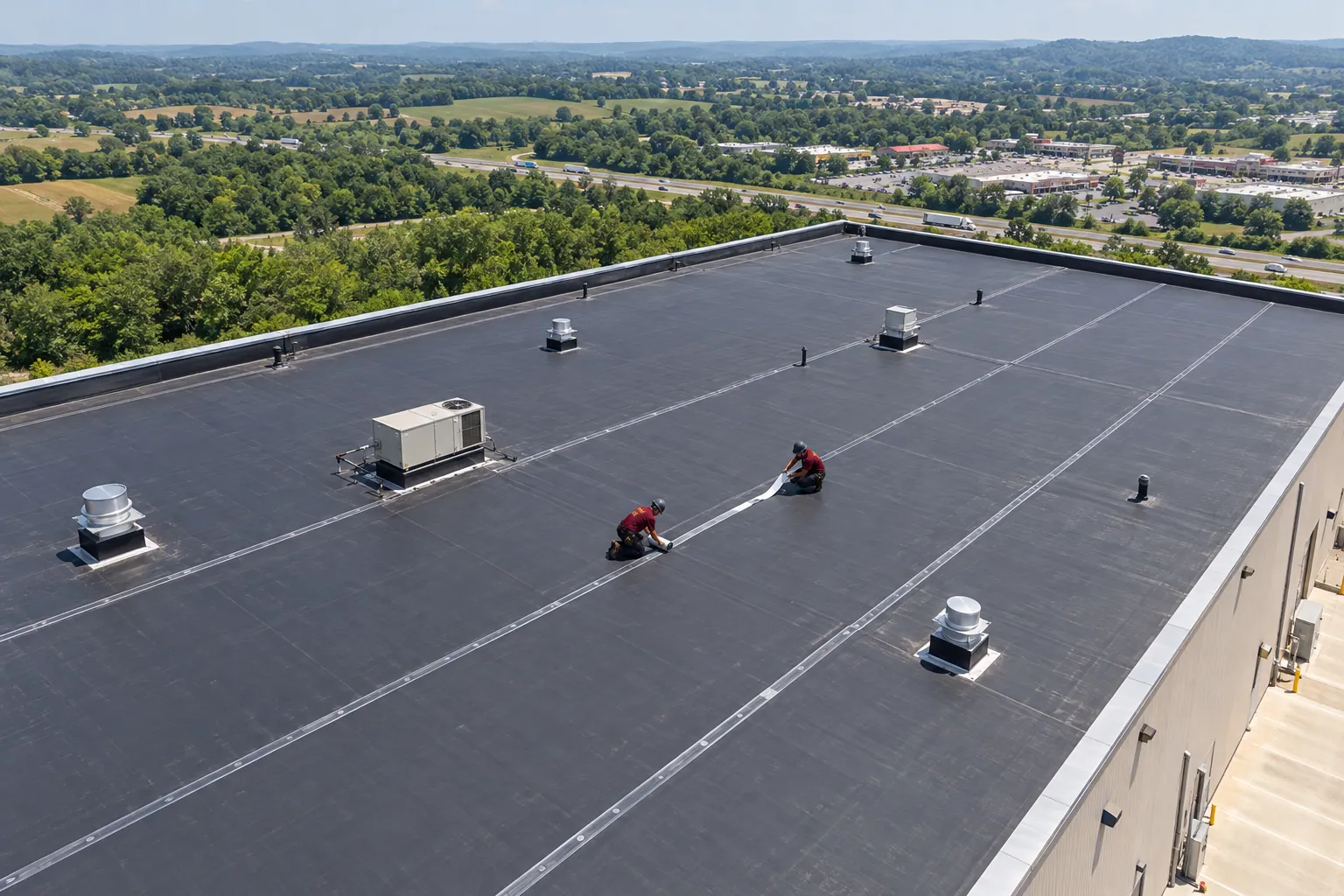
Rubber sheet stays flexible in cold, and taped seams go in once the primer flashes off on a dry day.
EPDM roofingCall and tell us whether the edges, the field, or the drains took the damage, and the roof walk starts there.
Five steps tie the roof work to the weather it will meet.
We walk the edges, corners, coping, drains, and gutters for storm and freeze damage, and core cuts show whether water reached the insulation.
Mechanically attached sheet or metal panels for colder months, fully adhered membrane for warmer stretches, chosen with the start date in mind.
Hart County's application asks for the building's dimensions and square footage, the electric utility, and a commercial or industrial check mark for the roof job, with the fee paid to the Fiscal Court.
Dew, deck temperature against the adhesive maker's range, wind, and incoming rain decide each day's work, and loose boards are weighted or fastened.
Each area is tied into the old roof before the crew leaves, so an overnight storm meets a closed roof.
Building somewhere past Munfordville? call us or send us a message. Commercial roofing work also runs to Elizabethtown and the towns listed here.
Home base, with city plan review for reroofing.
Elizabethtown commercial roofingStorefront rows and Grayson County permits.
Leitchfield commercial roofingChurch and school roofs, LaRue County permits.
Hodgenville commercial roofingHistoric district roofs, Nelson County permits.
Bardstown commercial roofingRooftop unit curbs, city building inspector.
Lebanon commercial roofingDrains and scuppers, city inspector review.
Springfield commercial roofingAnswers about weather, timing, and Hart County paperwork.
Hart County's application asks for the building's dimensions and square footage, the name of the electric utility, and a check mark for commercial or industrial work, and the fee goes to the Hart County Fiscal Court.
Munfordville has no city listing on the state's Hart County sheet, so the county building inspector reviews the job. When drain leaders are replaced, the county health department reviews the plumbing side.
Yes, with the right system. Mechanically attached membrane and metal panels go on in cold weather, while fully adhered roofs wait for deck and air temperatures inside the adhesive maker's range. Short days, dew, and freeze-thaw stretches slow the pace, and every section is sealed before the crew leaves.
Each adhesive maker sets a range for air and deck temperature, and adhered membrane goes down only inside it. Below that range the bond is weak, so crews check temperatures each morning and switch to mechanically attached sheet, or wait, when a cold snap sits over the job.
Book the roof walk well before the work season you want. Spring and fall bring the dry, mild days adhered roofs need, summer heat suits welding with early starts, and winter favors fastened systems. Planning early also leaves time for the Hart County permit and any material lead times.
Dew on insulation and membrane laps weakens welds and keeps primer from flashing off, so crews wipe laps dry and wait for surfaces to dry on cool mornings. Late starts in spring and fall are normal for that reason, and the work runs later into the afternoon instead.
Photograph stains inside, note where water came in, and call before anyone walks a wet roof. On the roof walk we check edges and corners for lift, the field for cuts and soft spots from hail, and drains and gutters for overflow, then photograph everything for insurance.
A roof walk now leaves time to match the system to the season and file the county paperwork.
Leave a name and number, or call (930) 201-3950 now.