Seams
Open Membrane Seams
A TPO weld that peels at the lap or EPDM tape that lifts at a T-joint lets water travel under the sheet before it shows inside.

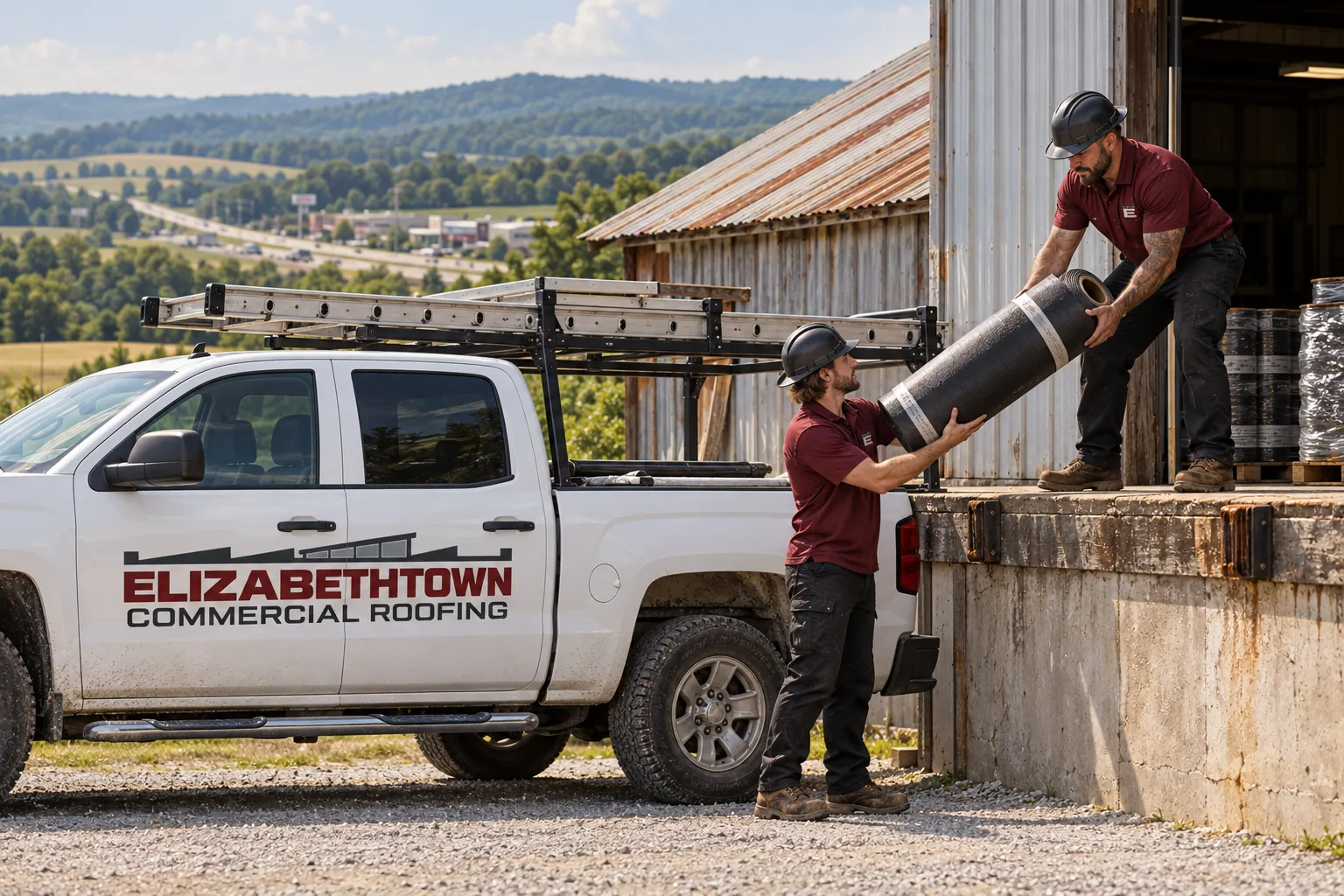
Elizabethtown Commercial Roofing repairs, replaces, and installs TPO, EPDM, flat, and metal roofs on commercial buildings. Every job starts with a roof walk and core cuts.
Elizabethtown commercial roofing calls usually start with one of these six conditions, and each one points to a different part of the roof.
A TPO weld that peels at the lap or EPDM tape that lifts at a T-joint lets water travel under the sheet before it shows inside.
Rooftop unit curbs and parapet walls move as the building heats and cools, and flashing pulled away from them is the leak path we trace most often.
Ponding rings around a drain or along a wall mean the slope or the outlet is wrong, and that water keeps working on the seams for days after rain.
Insulation that gives under a boot is usually wet, and wet boards under a new membrane keep holding water, so core cuts come before any recover plan.
On metal shops and warehouses, screws with cracked washers or rust at the end laps let water in long before a steel panel itself fails.
Stains that appear in new places after each storm often mean the roof is past patching, and a moisture survey shows how far the water has spread.
Six services cover the roofs we work on. The highlighted parts on each card show where that work happens on your building.
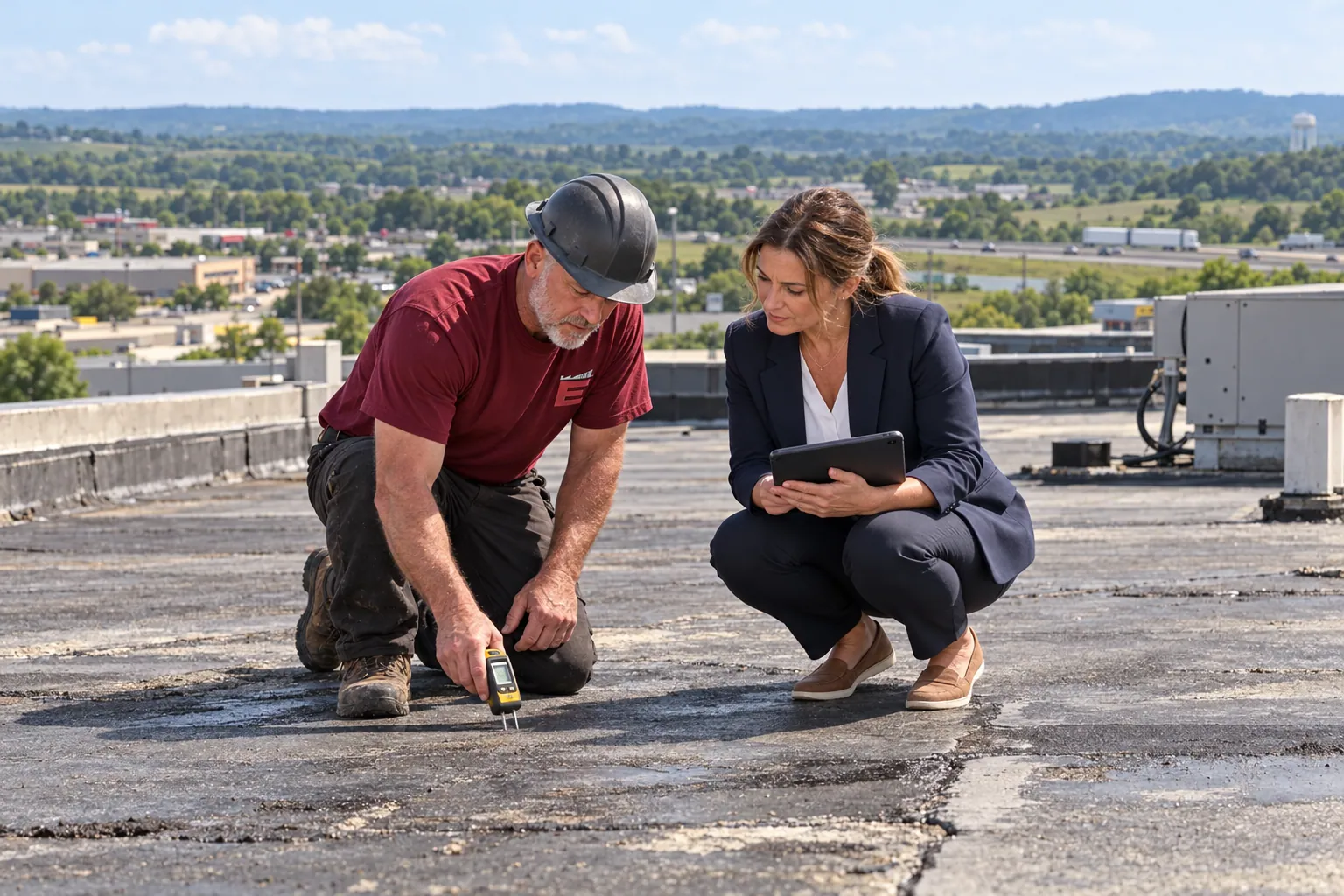
Leak tracing and repairs on membrane and metal roofs: welded or taped patches, resealed flashing, cleared and reset drains, and a clear note on when patching stops making sense.
Commercial roof repair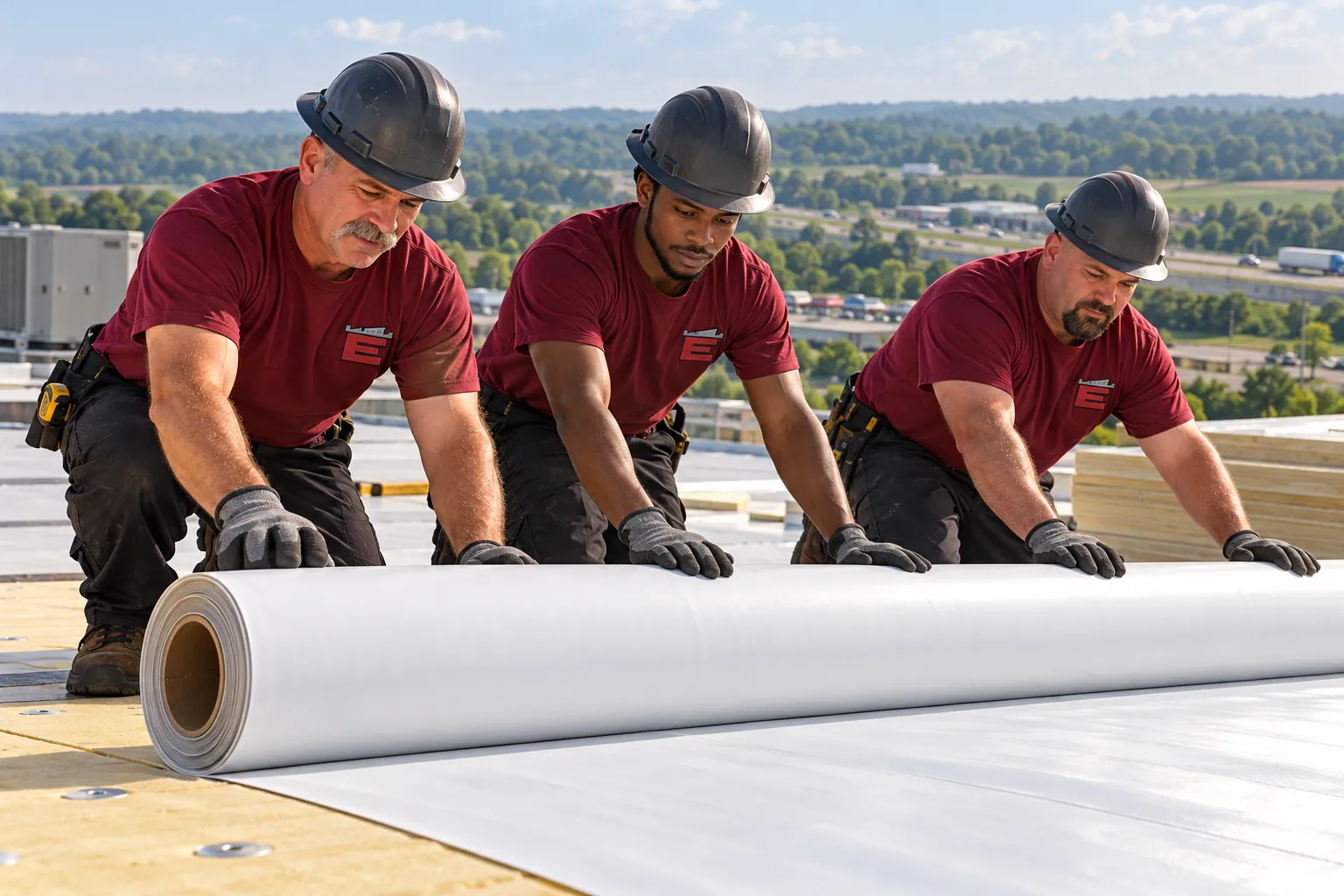
White heat-welded TPO over new insulation and cover board, with every seam probed and welded flashing at curbs, walls, and drains on warehouses, retail, and offices.
TPO roofing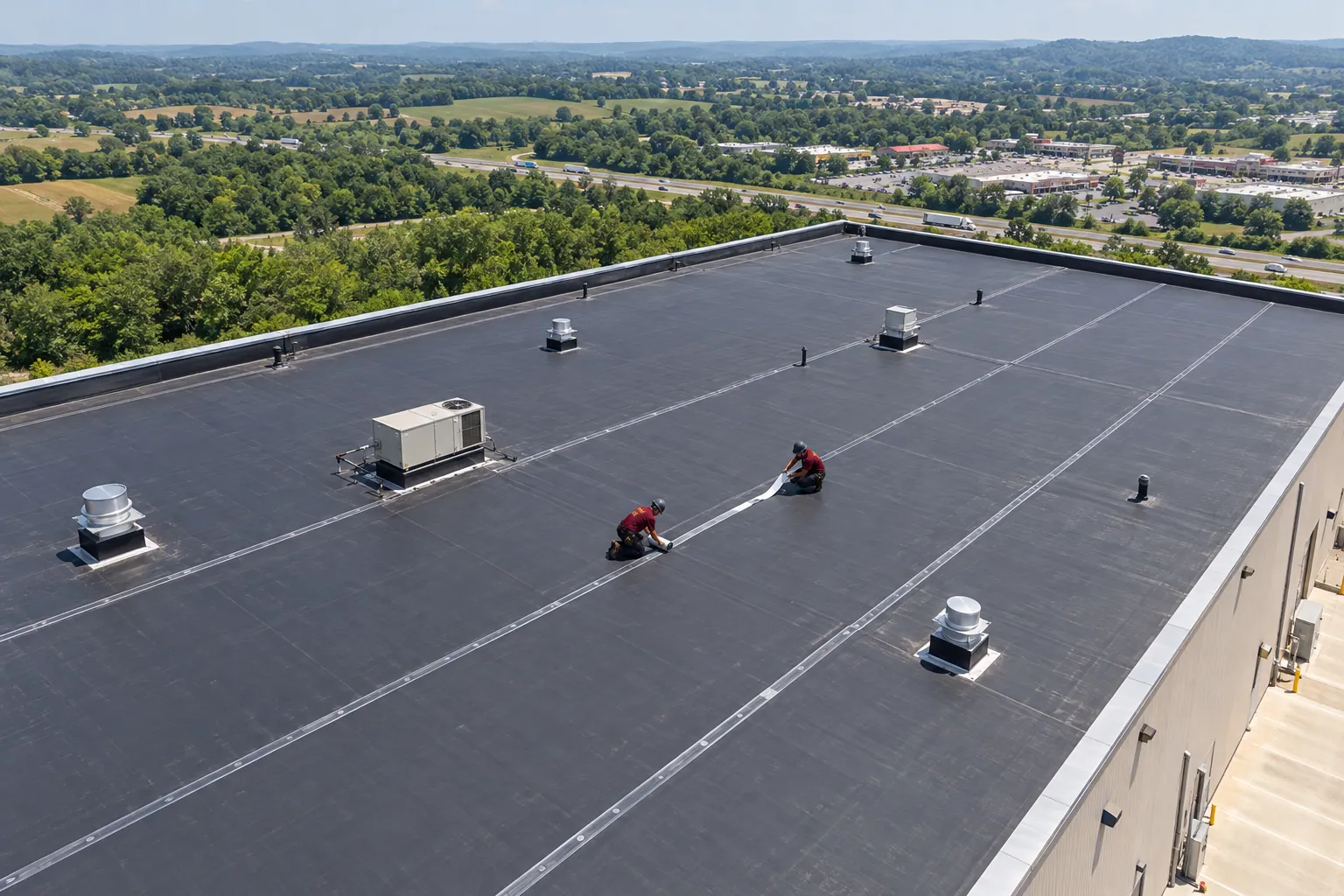
Black or white rubber sheet in wide rolls with taped seams, a close match for big, plain roofs, older plants, schools, and churches with flat sections.
EPDM roofing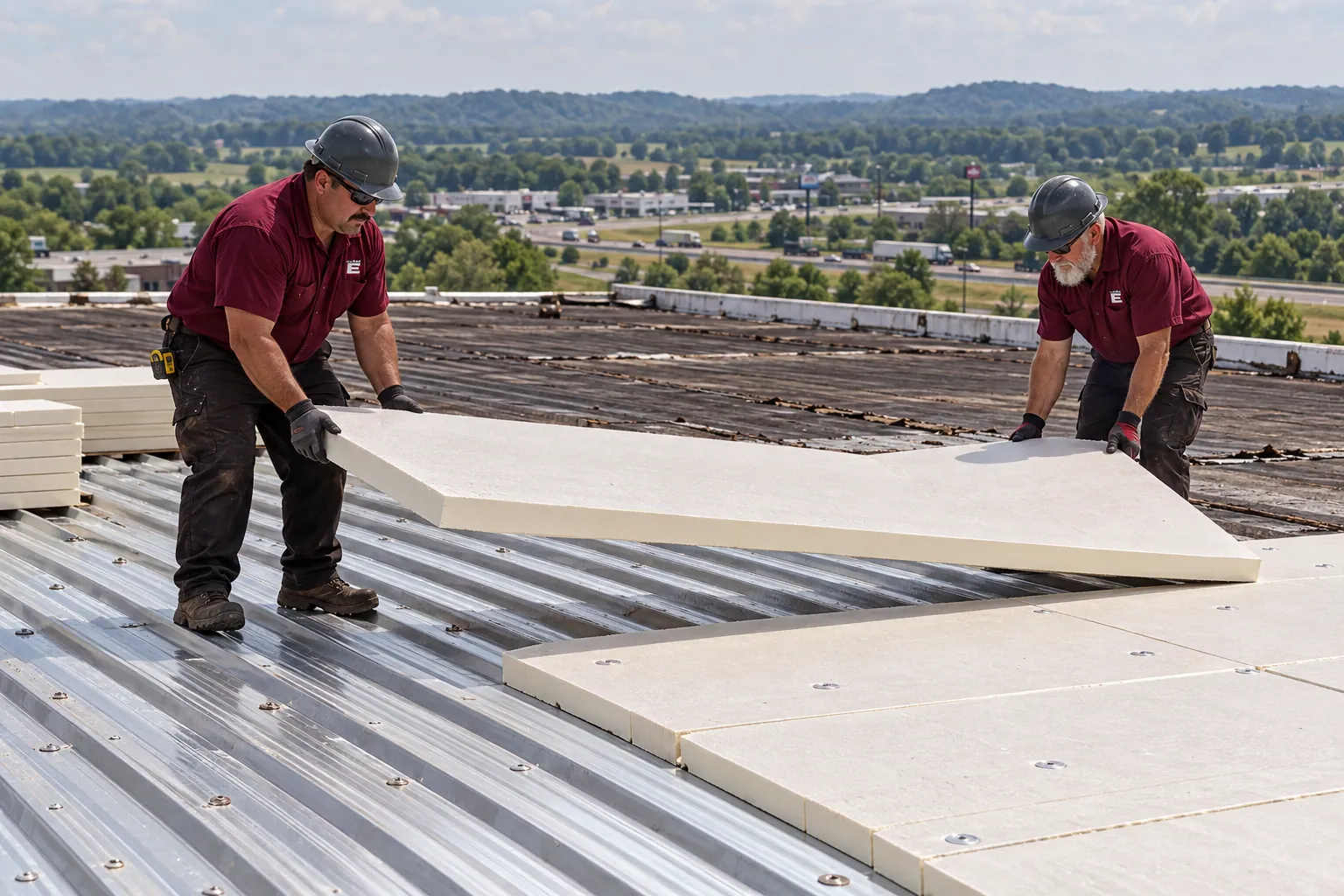
Low-slope replacement and recover work: tear-off where insulation is wet, tapered boards that move water to the drains, and new edge metal set to the finished height.
Flat roofing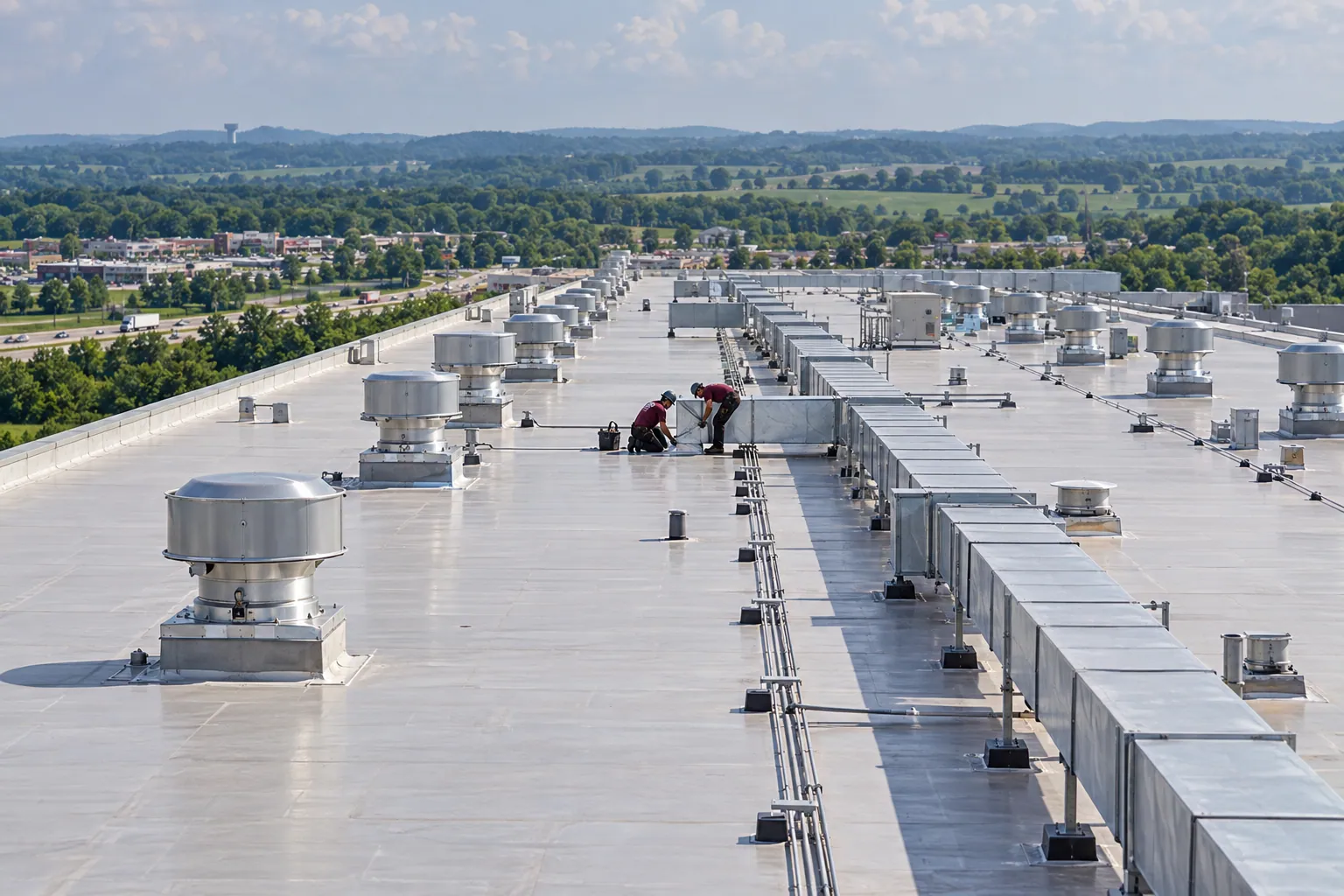
Plant and warehouse roofs with process exhaust, heavy units, and long drainage runs, replaced in sections so production keeps running under the work.
Industrial roofing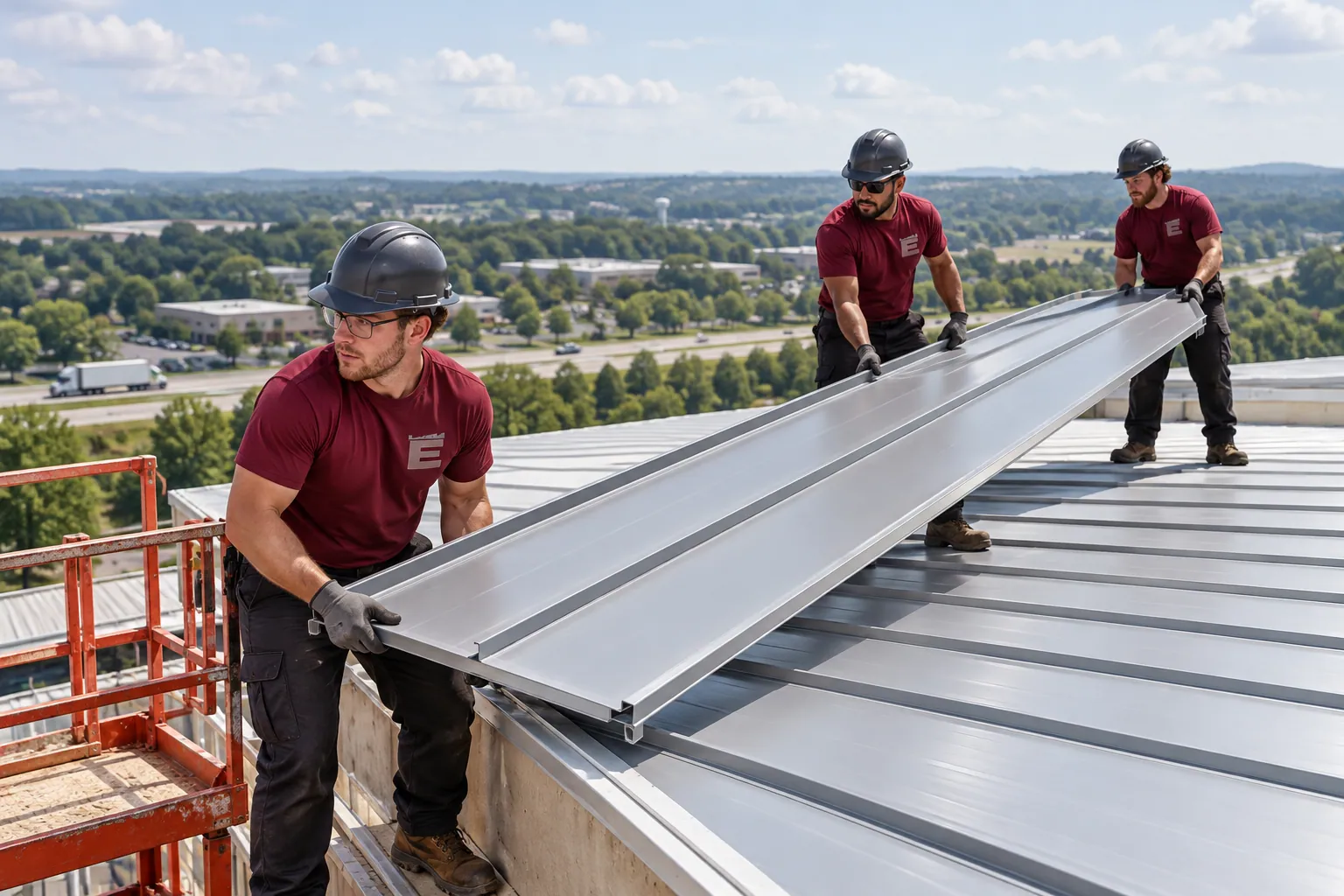
Standing seam and R-panel roofs installed, repaired, and maintained: matching panels, new screws and washers, resealed laps, and retrofit framing over tired flat roofs.
Commercial metal roofingCall and tell us where the stain is, how wide it has spread, and whether it grows with wind-driven rain or with every storm.
Commercial roof repair or replacement in Elizabethtown, KY usually comes down to these five points, checked on the roof and in the core samples.
Fits a roof with dry insulation and leaks at a few known spots.
Fits a roof where water has spread under the membrane.
A new roof or a finished repair shows up in three places: on the roof, inside the building, and in how you plan the next few years.
Tapered insulation and reset drain rings move rain off the field, so seams no longer sit under standing water for days after a storm.
New edge metal, cleats, and coping lock the perimeter against wind, which is where a roof starts peeling back first.
Once the leaks at curbs and seams are closed, ceiling tiles, inventory, and equipment under the deck stop catching drips after rain.
New insulation set to the energy code, and a white membrane where the building runs air conditioning, slow the heat moving through the roof deck.
Photos and a written scope for each finding let you plan roof work around budgets and busy seasons instead of reacting to the next ceiling stain.
Invoices that separate roofing, insulation, and edge metal, plus before photos, are the records a CPA or insurer asks for later.
Each job follows the same order, from the first roof walk to the final photos.
We walk the membrane or panels, seams, flashing, edge metal, drains, and every rooftop unit curb, then look at the underside of the deck from inside for stains and rusted fasteners.
Small core samples show how many layers are on the roof, what insulation is there, and whether it is wet. Each core is patched before the crew leaves.
You get photos of every finding and a scope naming the system, insulation thickness, edge details, and any drainage changes before any material is ordered.
The city or county office for your address gets the scope, and crane days, unit shutdowns, and work hours are set around how the building runs.
Crews tear off or prepare one area at a time and tie it into the old roof with a temporary seal at the end of each day, so overnight rain meets a closed roof.
Before the crew leaves, the finished roof gets a walk with you, and the edges, curbs, and drains are photographed for future inspections.
Not sure your building is in our area? call us or send us a message. We handle commercial roofing in Elizabethtown, the six towns below, and the places listed under them.
Grayson County's building inspector reviews reroofing here, since the city lists no inspector of its own. Storefront rows that share parapet walls are the roofs we plan most carefully.
Leitchfield commercial roofingLaRue County's inspector handles roof permits for buildings in town. Church, school, and meeting-hall roofs get scheduled around services and class hours.
Hodgenville commercial roofingHart County's permit form asks for the building's dimensions and its electric utility. Cold mornings and dew decide which roof systems go on in each season.
Munfordville commercial roofingBuildings in the historic district need review before visible roof changes. Nelson County Code Enforcement issues the building permit itself.
Bardstown commercial roofingThe city building inspector reviews roof replacements inside Lebanon. Raising rooftop unit curbs for thicker insulation is a regular part of the work.
Lebanon commercial roofingSpringfield's city inspector is the only local office on the state's Washington County sheet. Ponding, scuppers, and drain changes get close attention there.
Springfield commercial roofingAnswers to questions owners raise before a first roof walk.
Everything from the deck up. That means insulation boards, tapered insulation where water needs slope, a cover board against hail and foot traffic, the membrane, flashing at curbs and walls, and the edge metal and coping that hold the perimeter down. On a metal building it means panels, clips or screws, ridge cap, eave trim, and closures.
Dew, rain, and cold mornings decide each work day. Membrane laps need dry surfaces and adhesives have temperature limits, so a freeze-thaw stretch in winter can pause adhered work for days. Every section is closed before the crew leaves, and the National Weather Service office in Louisville issues the county warnings we watch during a job.
Price follows the roof, so a figure comes only after a measured roof walk. Square footage, how many old layers come off, wet insulation or deck repairs found during tear-off, the membrane or panel chosen, insulation thickness, the count of curbs and drains, parapet and edge length, and crane or lift access all move the number.
Roof plans or drawings with dimensions, the age of the current roof and the years of past repairs, photos of stains or drips, and a list of rooftop units, fans, and skylights. Tell us how the building runs too, since a three-shift plant, a school, and a storage building each need different work hours.
Both. Many calls end with a repair: a welded patch on a TPO seam, new tape on an EPDM lap, resealed curb flashing, or fresh screws on a metal roof. When core cuts show wet insulation across large areas, we explain why replacement makes more sense and what it would cover.
Warehouse roofs tend to be larger and plainer, with long drainage runs to interior drains and fewer penetrations, so wide TPO or EPDM sheets and tapered insulation do most of the work. Retail roofs carry more rooftop units, signs, and shared parapets, which means more flashing detail per square foot and tighter staging around open stores.
Book a roof walk, and you will see photos of every finding before any scope is written.
Leave a name and number, or call (930) 201-3950 now.