
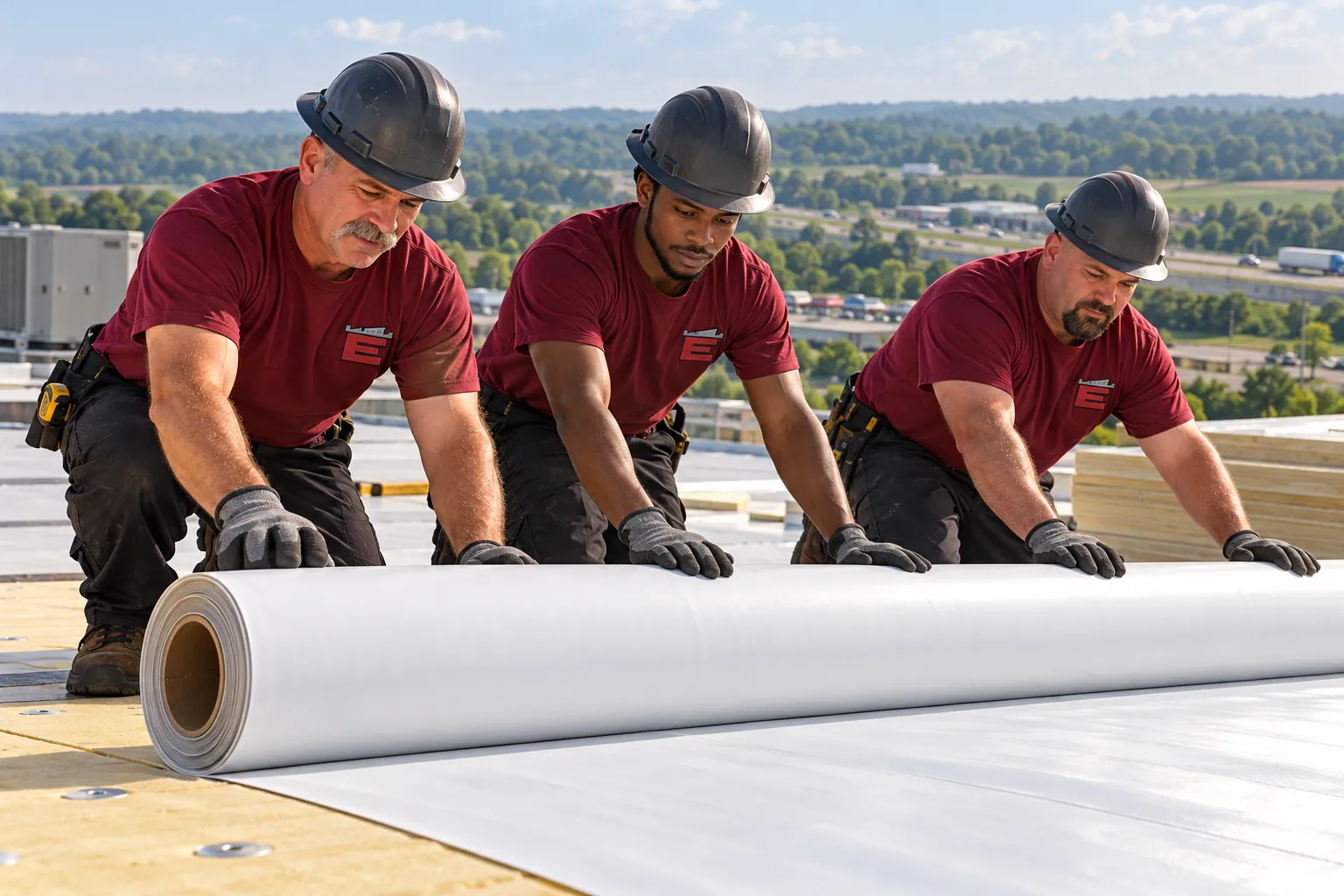
Roofers wearing the company logo heat-welding a white TPO membrane seam on a commercial roof

Elizabethtown TPO Roofing Contractor

Protect Cooled Buildings From Summer Heat, Ponding, and Open Seams

As an Elizabethtown TPO roofing contractor, we install white heat-welded TPO over new insulation, probe every seam, and weld the flashing at each curb and wall.

  • Hot-Air Welded SeamsProbed after welding
  • White Reflective SheetFor cooled buildings
  • Welded Curb FlashingPre-formed corners
  • Cover Board IncludedUnder the membrane

Is This Roof A Fit for TPO?

Most roofs that call for an Elizabethtown TPO roofing contractor fit standard TPO, but roofs near grease or process exhaust get compared with PVC first.

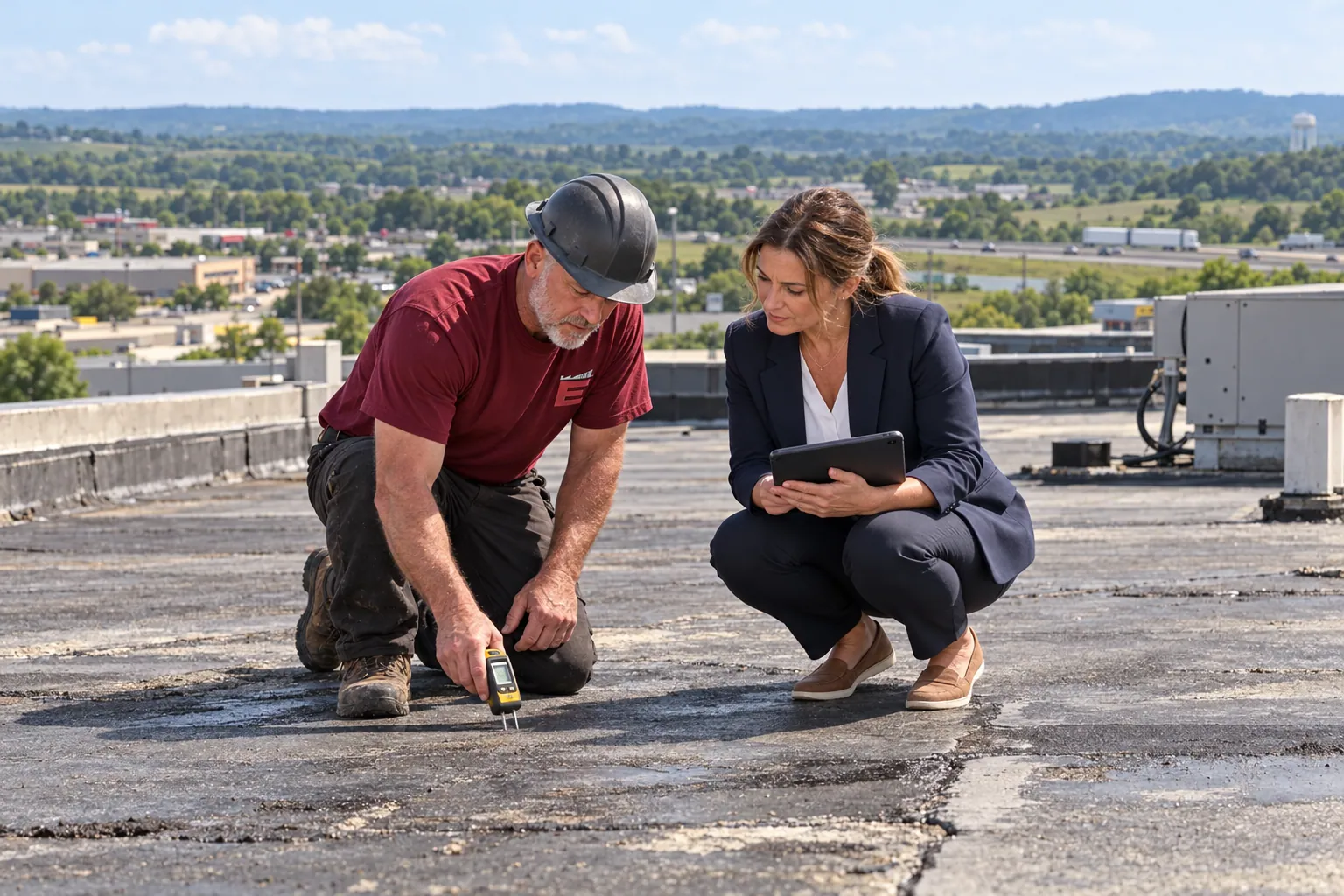
Roofer in a logo shirt walking a low-slope commercial roof and checking the membrane and flashing

TPO Membrane

A white thermoplastic sheet welded at every seam.

Seams
Hot-air welded into one piece
Color
White and reflective
Best On
Cooled warehouses, retail, and offices
Watch For
Grease or oil from kitchen or process exhaust
Hold-Down
Mechanically attached or fully adhered
PVC Membrane

Also welded, with better resistance to oils and grease.

Seams
Hot-air welded
Color
White
Best On
Roofs near grease or process exhaust
Watch For
Compatibility with any older membrane it touches
Hold-Down
Mechanically attached or fully adhered
TPO Roofing Conditions We Check in Elizabethtown

These TPO problems turn up on roof walks, and each one traces back to a weld, a detail, or the surface under the sheet.

Seams

Peeling Weld at a Lap

A seam that opens later traces back to a weld made too cold, too fast, or over a dusty or dewy lap, which is why test welds start each day.

Wind

Membrane Flutter at the Perimeter

When fastener rows sit too far apart, wind lifts the sheet between them; corner and perimeter zones get tighter spacing or full adhesion.

Curbs

Short Flashing at Rooftop Units

Curb flashing that stops low on a unit lets wind-driven rain behind it, so new wraps run high above the finished roof and end under a bar.

Residue

Grime Around Units and Exhaust

Dirt near units lowers the white sheet's reflectance, and grease from kitchen exhaust softens standard TPO over time.

TPO Roofing Work We Take On in Elizabethtown

Three kinds of TPO jobs cover most roofs, chosen by what sits under the current membrane.

New TPO Over a Tear-Off

Where insulation is wet or layers have piled up, the old roof comes off, the deck is checked, and new insulation, cover board, and welded TPO go down.

Flat roof replacement

TPO Recover

One dry, well-attached existing roof can take a cover board and new TPO on top, which saves removal and keeps the deck covered during the work.

Tear-off or recover

TPO Flashing and Detail Work

Curbs, walls, drains, and scuppers get welded TPO pieces, pre-formed corners, pipe boots, and walkway pads on the service paths to each rooftop unit.

Repairs on existing TPO

What a New TPO Roof Gives Your Building

A welded white roof changes three things: how water and heat meet the roof, what happens inside, and how you plan upkeep.

On The Roof

One-Piece Seams

Welded laps cool into one piece of plastic, so the seam is part of the membrane rather than a glued joint that can creep.

Matching Detail Pieces

Pre-formed corners, curb wraps, and pipe boots made from the same TPO keep the flashing consistent with the field sheet.

Inside The Building

Less Heat Through the Deck

White TPO reflects much of the sun's heat, so less of it reaches air-conditioned space; the DOE Guide to Cool Roofs explains this with reflectance and emittance ratings.

Quieter Rooftop Service

Walkway pads to each unit keep technicians off the open field, so service calls stop scuffing and puncturing the sheet above offices.

For Planning And Budget

Rated Products to Compare

The Cool Roof Rating Council directory lists tested membranes, so you can compare reflectance figures before a sheet is ordered.

Simple Upkeep

Rinsing heavy dirt near units and walking the roof after storms keeps the surface working the way it was built.

Seams Opening on Your TPO Roof?

Call with how many laps are lifting and where they are, and we can talk through whether a repair or a new sheet comes next.

How an Elizabethtown TPO Roofing Contractor Builds the Roof

Six steps take a TPO roof from the first walk to the final seam probe.

  1. Inspect Your Roof

    On The Roof

    We check the existing sheet, the deck from inside, rooftop unit curbs, and drains, and cut cores to see how many layers exist and whether the insulation is wet.

  2. Choose the Attachment

    Paperwork

    Steel decks with lighter loads often take mechanically attached sheet, while high-wind roofs and corners get full adhesion over a cover board; ballast is rare with TPO.

  3. Set Insulation and Cover Board

    On The Roof

    Insulation, tapered boards where water needs slope, and a cover board against hail and boot traffic go down before any membrane.

  4. Weld and Probe Every Seam

    On The Roof

    Test welds are cut and pulled at the start of each day, laps are wiped clean, and each finished seam is probed with a blunt tool for gaps or cold spots.

  5. Flash the Details

    On The Roof

    Membrane runs up each curb, wall, and parapet as a separate welded piece and ends under a termination bar or metal counterflashing; drains get clamping rings.

  6. Walkway Pads and Final Photos

    Paperwork

    Pads go along the service paths to each unit, and you receive photos of the seams, curbs, and drains as built.

Other Membrane Work Around Elizabethtown

Two other services often come up during a TPO roof walk.

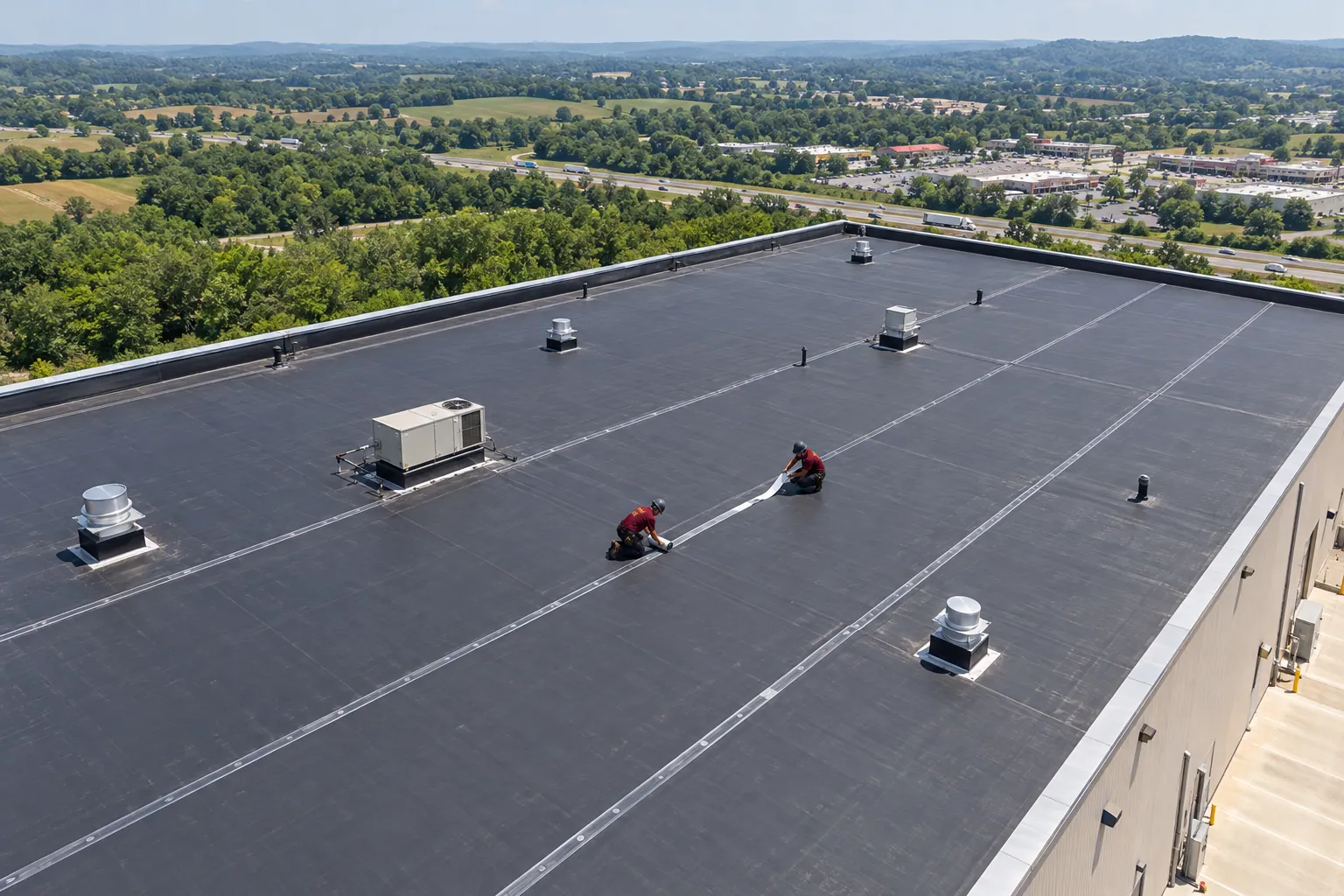
Roofer in a logo uniform rolling a taped seam on a black EPDM rubber roof

EPDM Roofing

Big, plain roofs with few penetrations, or buildings that run little air conditioning, sometimes fit wide rubber sheet better than TPO.

EPDM roofing
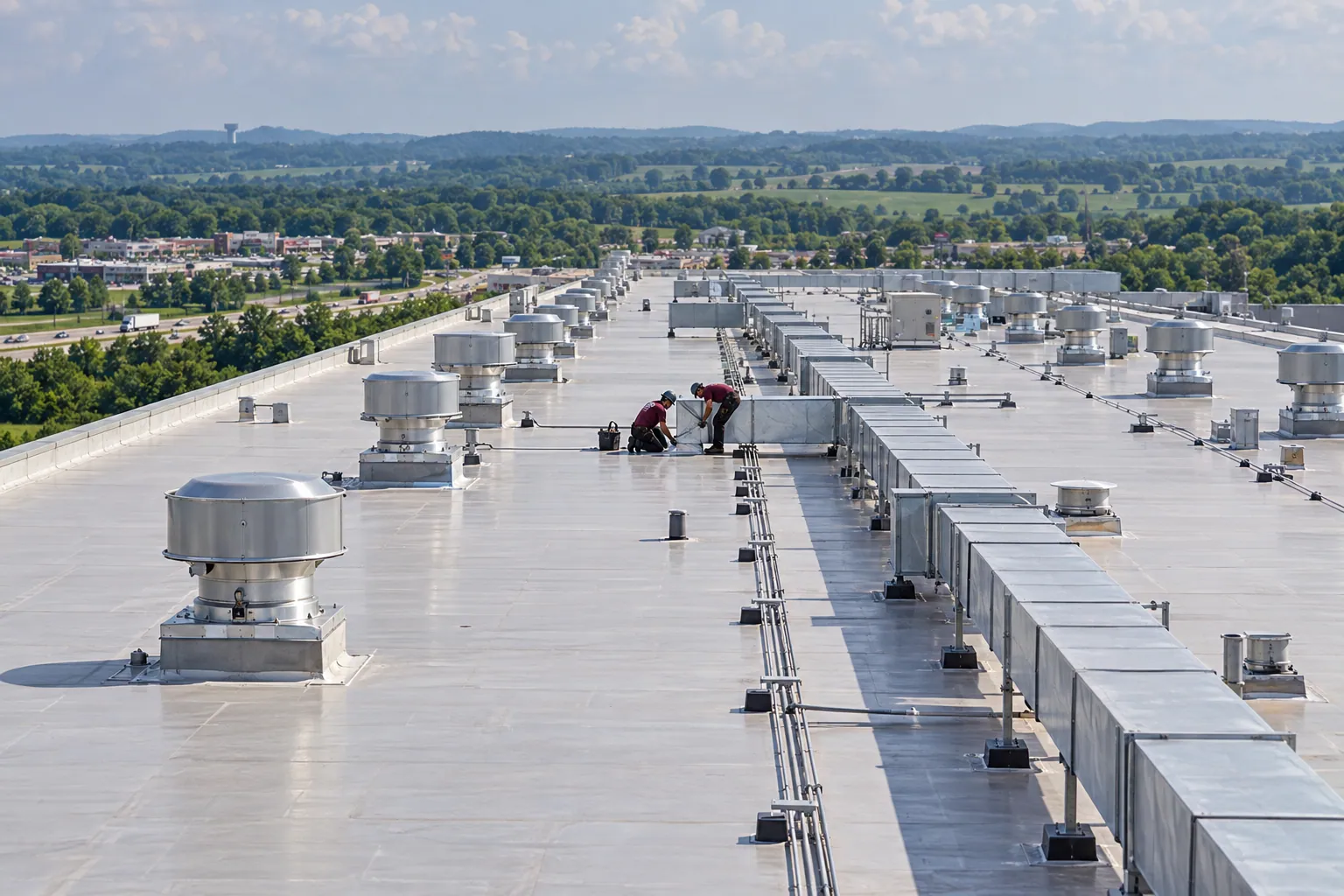
Roofing crew in logo shirts working across a large industrial roof with exhaust fans and rooftop units

Industrial Roofing

Plant roofs with process exhaust need a membrane checked against the residue, which can mean PVC zones beside the TPO.

Industrial roofing

TPO Roofing Questions From Elizabethtown Buildings

Answers to the questions owners ask about welded TPO roofs.

What is a TPO roof, and which commercial buildings use it?

TPO is a single-ply thermoplastic sheet, usually white, rolled out in wide sheets and heat-welded at each seam. It covers many warehouses, retail centers, offices, and light industrial buildings with flat or low-slope roofs, and it also works as a recover over a dry, firmly attached existing roof.

How does TPO roof seam welding work on Elizabethtown, KY roofs?

A hot-air welder melts the two overlapping sheets together, and once cooled the lap is one piece of plastic. Crews probe every seam afterward and pull apart small test welds each morning to confirm the welder settings. Clean, dry laps matter, since dew and dust weaken a weld.

Mechanically attached vs fully adhered TPO: which one fits?

Deck type, wind exposure, and edge height decide. Mechanically attached sheet uses plates and screws in the laps and suits steel decks. Fully adhered sheet bonds to a cover board and suits corners and high-wind roofs, but it needs dry weather and set temperatures. Corner and perimeter zones get tighter fastening either way.

Is a white TPO roof worth it for an air-conditioned warehouse?

A white TPO roof helps most where the roof is large and open, ductwork runs just under the deck, or the insulation over a steel deck is thin. The white surface reflects much of the sun's heat, so less reaches cooled space. Dirt lowers reflectance, so rinsing buildup near units keeps it working.

How is TPO flashing done around rooftop units?

Each curb is wrapped with membrane and pre-formed outside corners, welded like the field seams, and run high enough above the finished roof. Walls end under a termination bar with sealant or metal counterflashing, drains are clamped with a ring, and scuppers get a membrane sleeve through the parapet.

Can TPO go over the roof that is on the building now?

Sometimes. A recover fits when there is one existing layer that is dry and firmly attached, which core cuts and a moisture survey show. A cover board goes between the old roof and the new TPO, and the local building official decides whether that roof can be recovered.

Hire an Elizabethtown TPO Roofing Contractor

Start with a roof walk and core cuts, then see the attachment, insulation, and flashing plan in writing.

Call Us (930) 201-3950